Popular Searches
- Cancer Types
- Treatment
Popular Searches
- Cancer Types
- Treatment

Popular Searches
Bladder cancer occurs when cancer cells form in the bladder, a hollow organ in the lower abdomen that stores urine.
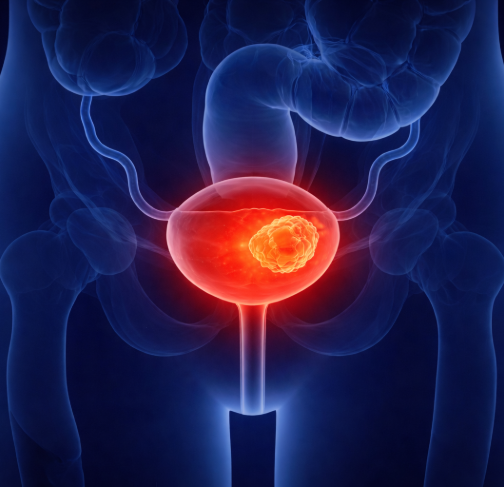
Bladder cancer occurs when cancer cells form in the bladder, a hollow organ in the lower abdomen that stores urine. Most bladder cancers begin in the urothelium, the inner lining of the bladder, and are called urothelial carcinoma (previously known as transitional cell carcinoma). While bladder cancer most often affects the bladder lining, it can grow into deeper layers of the bladder wall over time.
Bladder cancer is commonly grouped into two main categories based on the depth of invasion:
This distinction directly guides treatment decisions and follow-up planning. Bladder cancer is more common in older adults and in individuals with certain risk factors, making early detection critical for improving outcomes.
At OncoClinic, we focus on accurate diagnosis and staging, clear explanations, and a personalized plan aligned to your cancer type and overall health.
These symptoms can also be caused by other conditions such as urinary tract infections or kidney stones. If any of these symptoms persist, consult a healthcare provider for a thorough evaluation.
Stopping smoking and reducing exposure to harmful chemicals are the most effective ways to lower bladder cancer risk. Understanding risk factors can help with awareness, early evaluation of symptoms, and prevention strategies.
Screening refers to testing people without symptoms. At this time, there is no routine screening program recommended for bladder cancer in the general population.
Bladder cancer is usually diagnosed after a person develops symptoms, most commonly blood in the urine, which may be painless. Because symptoms are not part of screening, their presence leads to diagnostic evaluation.
This analysis determines:
Distinguishing between non-muscle invasive and muscle-invasive bladder cancer is critical, as it strongly influences treatment decisions.
After bladder cancer is diagnosed, additional tests are done to determine the stage of the disease. Staging describes how deeply the cancer has grown into the bladder wall and whether it has spread to lymph nodes or other parts of the body. This information is essential for choosing the most appropriate treatment and understanding what to expect.
Staging is based on the results of pathology from the bladder tumor and imaging exams, which may include:
In general, earlier stages are easier to treat and often have better outcomes, while more advanced stages may require more intensive treatment. Staging plays a key role in guiding treatment decisions and planning ongoing care.
At OncoClinic, we provide comprehensive care for people with bladder cancer, focusing on a personalized and effective treatment approach. Our multidisciplinary team works together to develop individualized treatment plans based on the type and stage of the cancer, as well as each patient’s overall health and preferences. Our services include:
Personalized treatment plans: Treatment strategies are tailored to each patient based on whether the cancer is non-muscle invasive (NMIBC) or muscle-invasive (MIBC), the stage of disease, and individual health needs.
Surgery: Surgery is an important treatment option for many patients with bladder cancer, particularly those with muscle-invasive disease or high-risk tumors. When surgery is recommended, it is performed at one of our partner hospitals, with treatment planning, coordination, and follow-up care managed by the OncoClinic team.
Intravesical therapy: For non-muscle invasive bladder cancer, treatment may include intravesical therapy, in which chemotherapy or immunotherapy (such as BCG therapy) is delivered directly into the bladder to reduce the risk of recurrence and progression.
Chemotherapy: Systemic chemotherapy may be used before surgery, after surgery, or as the main treatment in more advanced cases. Chemotherapy works throughout the body to target cancer cells and reduce the risk of spread.
Radiation therapy: Radiation therapy uses high-energy radiation to destroy cancer cells. It may be used in combination with chemotherapy for selected patients, especially when surgery is not an option or as part of bladder-preserving treatment approaches.
Targeted therapy and immunotherapy: For advanced bladder cancer, targeted therapies and immunotherapies may be used to help the immune system recognize and attack cancer cells or to block specific pathways that help cancer grow.
Multidisciplinary care: Care is provided by a coordinated team that includes urologists, medical oncologists, radiation oncologists, nurses, and psychosocial support professionals, all working together to ensure comprehensive and well-coordinated care.
Supportive care: Supportive services such as nutritional counseling, psychological support, pain management, and rehabilitation are offered to help patients manage side effects and maintain quality of life throughout treatment.
Bladder cancer overview
American Cancer Society, 2026
Bladder cancer risk factors
American Cancer Society, 2026
Signs and symptoms of bladder cancer
American Cancer Society, 2026
Tests for bladder cancer (diagnosis)
American Cancer Society, 2026
Bladder cancer stages
American Cancer Society, 2026
Bladder cancer – patient version
National Cancer Institute (NCI), 2026
Bladder cancer treatment (PDQ®) – patient version
National Cancer Institute (NCI), 2026
NCCN clinical practice guidelines in oncology: bladder cancer
National Comprehensive Cancer Network (NCCN), 2026
EAU guidelines on non–muscle-invasive bladder cancer
Babjuk M et al. – European Urology, 2022
EAU guidelines on muscle-invasive and metastatic bladder cancer
Witjes JA et al. – European Urology, 2021
Diagnosis and treatment of non–muscle invasive bladder cancer
Chang SS et al. – AUA Guideline, 2016
Bladder cancer: ESMO clinical practice guidelines
Powles T et al. – Annals of Oncology, 2022
Bladder cancer statistics
Surveillance, Epidemiology, and End Results (SEER) Program, 2026
Bladder cancer
Sanli O et al. – Nature Reviews Disease Primers, 2017
Radical cystectomy in the treatment of invasive bladder cancer
Stein JP et al. – Journal of Clinical Oncology, 2001