Popular Searches
- Cancer Types
- Treatment
Popular Searches
- Cancer Types
- Treatment

Popular Searches
Brain cancer refers to any tumor that forms in the brain or spinal cord.
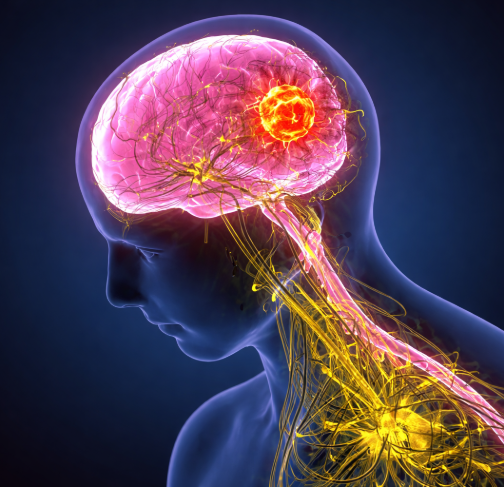
Brain tumors refer to tumors that form in the brain or spinal cord. They are made up of abnormal cells growing in an uncontrolled way. Because the brain controls essential functions of the body, a tumor can affect normal brain function depending on where it is located.
Brain tumors may be benign (non-cancerous) or malignant (cancerous). Benign tumors often grow more slowly and are less likely to spread to other tissues, but they can still affect nearby brain structures and may return after treatment. Malignant tumors tend to grow more quickly and can invade surrounding brain tissue.
Common types of primary brain tumors include:
At OncoClinic, we coordinate precise imaging and diagnosis, provide clear explanations, and develop a personalized care plan tailored to your specific situation and goals.
Since many of these symptoms can be caused by other conditions, consult a healthcare provider if they persist or worsen. Early diagnosis improves treatment outcomes.
Exposure to radiation, particularly during childhood, is the strongest known environmental risk factor for brain tumours. However, it is important to note that most brain tumours develop without any identifiable cause.
Screening refers to testing people without symptoms. At this time, there is no routine screening program recommended for cancers of primary central nervous system cancer (CNS) in the general population.
Brain tumors are usually suspected based on imaging exams, not through routine screening. Symptoms such as headaches, seizures, weakness, vision changes, or behavioral changes often prompt further evaluation.
The diagnostic process typically includes:
Unlike many other cancers, a biopsy is usually not performed before surgery. In most cases, the diagnosis is suspected based on imaging findings, and surgery serves both a diagnostic and therapeutic purpose.
Brain tumors are not staged using the traditional Stage I–IV system. Instead, doctors assess several factors to understand how the tumor behaves and how aggressive it is.
This evaluation may include:
These findings help guide treatment decisions and provide important information about prognosis.
At OncoClinic, we provide individualized, patient-centered care for people with brain tumors and related neurological conditions. Our team focuses exclusively on neuro-oncology and works closely with specialized partner hospitals to ensure comprehensive care across all stages of treatment. Our services include:
Advanced diagnostic coordination: Our diagnostic pathway is designed to support timely and accurate diagnosis, coordinating imaging, pathology review, and specialist evaluation to avoid unnecessary delays in care.
Personalized treatment plans: Each patient receives a customized treatment plan based on the type, location, and behavior of the brain tumor, as well as overall health and personal needs.
Surgery (in partnership with specialized hospitals): Surgery is often the most important treatment for brain tumors, serving both diagnostic and therapeutic purposes. When surgery is recommended, it is performed at one of our partner hospitals by experienced neurosurgical teams. OncoClinic coordinates pre-surgical evaluation, treatment planning, and postoperative follow-up care.
Systemic therapy: Depending on the tumor type and stage, treatment may include systemic therapies such as chemotherapy or other drug-based treatments. These therapies help control tumor growth and are often delivered on an outpatient basis under the supervision of our neuro-oncology team.
Radiation therapy: We offer advanced image-guided radiation therapy to precisely target tumors while minimizing exposure to healthy brain tissue. Radiation may be used after surgery or as the main treatment when surgery is not possible.
Multidisciplinary care: Care is delivered by a coordinated team that includes neuro-oncologists, neurosurgeons (at partner hospitals), radiation oncologists, neuroradiologists, neuropathologists, specialized nurses, and support professionals, all working together to ensure comprehensive and compassionate care.
Psychosocial and neuropsychological support: We provide specialized psychosocial oncology and neuropsychological support to help patients and families cope with the emotional, cognitive, and psychological challenges of a brain tumor diagnosis and treatment.
Our clinic is committed to delivering high-quality, evidence-based neuro-oncology care, with a strong focus on treatment effectiveness, coordination with surgical partners, and preservation of quality of life throughout the patient journey.
Brain and spinal cord tumors in adults – overview
American Cancer Society, 2026
Tests for brain and spinal cord tumors in adults
American Cancer Society, 2026
Treatment of brain and spinal cord tumors in adults
American Cancer Society, 2026
Brain tumors treatment (PDQ®) – patient version
National Cancer Institute (NCI), 2026
NCCN clinical practice guidelines in oncology: central nervous system cancers
National Comprehensive Cancer Network (NCCN), 2026
The 2021 WHO classification of tumors of the central nervous system
Louis DN et al. – Acta Neuropathologica, 2021
EANO guidelines on the diagnosis and treatment of adult gliomas
Weller M et al. – The Lancet Oncology, 2021
Radiotherapy plus concomitant and adjuvant temozolomide for glioblastoma
Stupp R et al. – New England Journal of Medicine, 2005
CBTRUS statistical report: primary brain and other CNS tumors
Ostrom QT et al. – Neuro-Oncology, 2023