Popular Searches
- Cancer Types
- Treatment
Popular Searches
- Cancer Types
- Treatment

Popular Searches
Head and neck cancer refers to cancers that develop in the mouth, throat, larynx (voice box), sinuses, and salivary glands.
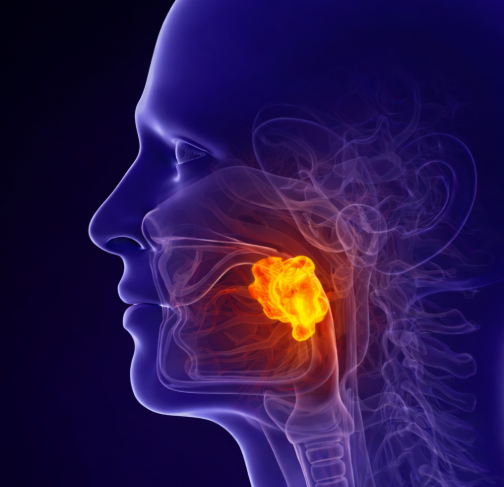
Head and neck cancer refers to cancers that develop in the mouth, throat, larynx (voice box), sinuses, and salivary glands. These cancers usually begin in the cells that line the mucosal surfaces of these areas. The most common type of head and neck cancer is squamous cell carcinoma, which arises from the flat cells lining the affected areas.
Head and neck cancer is often categorized based on the area of origin, including:
Although head and neck cancers can occur in anyone, they are more frequently diagnosed in people with certain risk factors—particularly tobacco use and alcohol consumption, which together significantly increase risk. At OncoClinic, we support you with accurate diagnostics, clear explanations, and coordinated care planning tailored to your specific cancer and overall health.
Other symptoms may include ear pain, hearing problems, nasal congestion, frequent nosebleeds, bleeding from the mouth or nose, loose teeth, jaw stiffness, facial numbness or weakness, chronic cough, coughing up blood, and unexplained weight loss
If any of these symptoms persist for more than two weeks, consult a healthcare provider promptly as early diagnosis greatly improves treatment outcomes.
There is no formal population-based screening program for head and neck cancer. However, early detection is often possible through awareness of symptoms and routine clinical examinations, as visible and palpable lesions in the mouth, throat, and neck can be identified during medical or dental visits.
Head and neck cancer is often suspected based on persistent symptoms or abnormal findings during a clinical or dental examination.
Diagnostic evaluation typically includes:
In some cases, the following tests may be ordered to further evaluate the tumour:
Early and accurate diagnosis is essential for appropriate staging and treatment planning.
Staging of head and neck cancer determines the extent of disease and helps guide treatment and prognosis. It is performed after diagnosis using clinical findings, imaging, and pathology.
Staging evaluation typically includes imaging studies:
At OncoClinic, we provide comprehensive care for patients with head and neck cancer. Due to the complexity of these tumors and their impact on vital functions such as speech, swallowing, breathing, and appearance, a multidisciplinary approach is essential.
Our team works collaboratively to ensure that each patient receives a personalized, evidence-based treatment plan, tailored to the specific tumor characteristics and individual needs, with a strong focus on both cancer control and quality of life. Our services include:
Surgery: Surgery may be used to remove the tumor and, when necessary, nearby lymph nodes in the neck. It is commonly used for early-stage cancers and selected advanced cases, sometimes followed by additional treatment.
Systemic therapy: Systemic treatments work throughout the body and include Chemotherapy, often combined with radiation for locally advanced disease, Targeted therapy and immunotherapy, used in selected patients, particularly in recurrent or metastatic disease.
Radiation therapy: Radiation uses high-energy beams to destroy cancer cells. It can be used alone for early-stage disease or combined with surgery and/or chemotherapy in more advanced stages. Radiation is also an important option when surgery is not appropriate.
Combined (Multimodal) Treatment: Many patients with advanced head and neck cancer receive a combination of treatments, such as surgery followed by radiation or chemoradiation, to improve cancer control.
Supportive and rehabilitative care: Supportinve care is an essential part of treatment and may include nutritional support, dental care, speech and swallowing therapy, pain management, psychological and social support.
The goal of treatment is not only to control or cure the cancer, but also to preserve speech, swallowing, appearance, and quality of life whenever possible. Your healthcare team will explain the recommended treatment plan and discuss potential benefits and side effects.
NCCN clinical practice guidelines in oncology: head and neck cancers
National Comprehensive Cancer Network (NCCN), latest version
ESMO–EURACAN clinical practice guidelines for squamous cell carcinoma of the head and neck
European Society for Medical Oncology (ESMO), 2022
EHNS–ESMO–ESTRO clinical practice guidelines for head and neck cancer
European Head and Neck Society (EHNS), 2022
Squamous cell carcinoma of the head and neck: ESMO–EHNS–ESTRO clinical practice guidelines
Machiels J-P et al. – Annals of Oncology, 2022
Impact of late treatment-related toxicity on quality of life among patients with head and neck cancer
Langendijk JA et al. – Journal of Clinical Oncology, 2008
Dysphagia in head and neck cancer patients treated with radiation
Murphy BA, Gilbert J – Journal of Clinical Oncology, 2009