Popular Searches
- Cancer Types
- Treatment
Popular Searches
- Cancer Types
- Treatment

Popular Searches
Kidney cancer, also known as renal cell carcinoma (RCC), occurs when cancer cells form in the tissues or tiny tubes (tubules) of the kidneys.
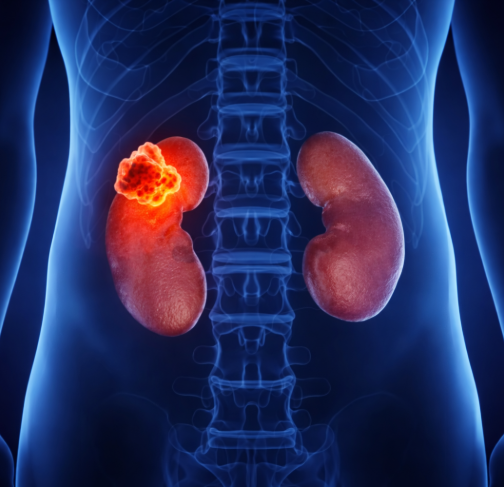
Kidney cancer, also known as renal cell carcinoma (RCC), occurs when cancer cells form in the tissues or tiny tubes (tubules) of the kidneys. It typically grows as a single tumor within one kidney, but in some cases more than one tumor may form, or tumors may be present in both kidneys. Another form of kidney cancer, Wilms’ tumor, affects children and is the most common form of pediatric kidney cancer.
Kidney cancer may not cause noticeable symptoms in its early stages. As the tumor grows, signs may appear that require medical attention, which is why timely evaluation matters. Early detection and appropriate treatment are important for improving outcomes.
At OncoClinic, we provide clear diagnostics, careful assessment, and a personalized plan tailored to your specific situation and goals.
If any of these symptoms persist, consult a healthcare provider without delay, as early detection is key to better treatment outcomes.
Understanding these risk factors helps clinicians and patients focus on prevention and timely evaluation when symptoms arise.
At present, there is no recommended routine screening for kidney cancer in the general population or even in most high-risk groups.
Kidney cancer is most often diagnosed incidentally during imaging performed for unrelated reasons.
Staging is performed using the TNM classification system.
Staging investigations include:
Accurate staging is essential for prognostic assessment and for guiding treatment decisions
At OncoClinic, we provide comprehensive care for patients with kidney cancer. Our multidisciplinary team ensures that each patient receives a personalized and effective treatment plan. Services include:
Personalized treatment plans: Each patient’s care is tailored to the type, stage, and location of the kidney cancer.
Surgery: When surgery is indicated, procedures are performed in collaboration with our accredited partner hospitals, ensuring high standards of surgical expertise and continuity of care.
Systemic therapy: We offer evidence-based systemic treatments, including targeted therapies and immunotherapy, tailored to disease stage and individual patient characteristics.
Radiation therapy: For patients who are not candidates for surgery, we offer highly targeted radiation therapies designed to maximize tumor control while minimizing damage to surrounding healthy tissues.
Multidisciplinary care: Our team includes urologists, medical oncologists, radiation oncologists, radiologists, pathologists, and specialized nurses, working collaboratively to deliver coordinated and compassionate care.
Support services: We provide comprehensive support services, including nutrition counseling, psychosocial support, and survivorship care, ensuring patients are supported throughout their treatment journey.
We are committed to delivering the highest standard of care and improving outcomes for patients with kidney cancer through personalized treatment strategies and multidisciplinary collaboration.
EAU guidelines on renal cell carcinoma
European Association of Urology, latest update
NCCN clinical practice guidelines in oncology: kidney cancer
National Comprehensive Cancer Network (NCCN), latest version
EAU guidelines on renal cell carcinoma: 2023 update
Ljungberg B et al. – European Urology, 2023
Kidney cancer, version 4.2022, NCCN clinical practice guidelines in oncology
Motzer RJ et al. – Journal of the National Comprehensive Cancer Network, 2022
Renal cell carcinoma: ESMO clinical practice guidelines for diagnosis, treatment and follow-up
Escudier B et al. – Annals of Oncology, 2017
Renal cancer
Capitanio U, Montorsi F – The Lancet, 2016
The genetic basis of kidney cancer: a metabolic disease
Linehan WM et al. – Nature Reviews Urology, 2010
Systemic therapy for renal cell carcinoma
Powles T et al. – The Lancet Oncology, 2022