Popular Searches
- Cancer Types
- Treatment
Popular Searches
- Cancer Types
- Treatment

Popular Searches
Leukemia is a cancer that affects the blood and bone marrow, where blood cells are made.
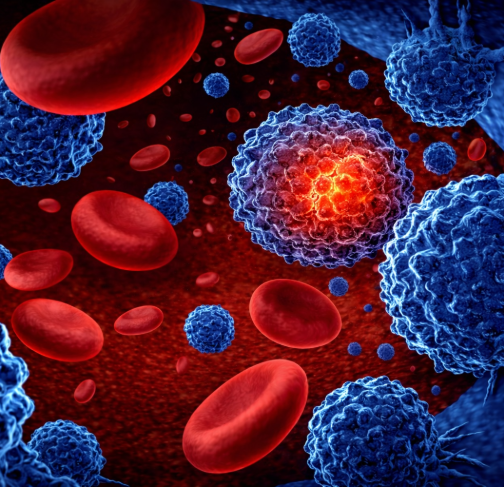
Leukemia is a cancer that affects the blood and bone marrow, where blood cells are made. In leukemia, the body produces abnormal white blood cells that don’t work the way they should. These unhealthy cells can build up and leave less room for healthy blood cells. As a result, people may feel more tired than usual, get infections more easily, or notice bruising or bleeding.
Leukemia is classified into several types based on the speed of progression and the type of blood cell affected:
Leukemia can affect both children and adults, with all being more common in children, and CML and CLL being more common in adults. At OncoClinic, we provide rapid and precise diagnostics to identify the type and stage of leukaemia, creating a treatment plan that aligns with the specific needs of each patient.
Since these symptoms can overlap with other conditions, consult a healthcare provider if any of them persist.
While these factors can increase the risk, most people with leukemia have no known risk factors.
Leukemia is usually diagnosed when symptoms develop or when abnormal blood test results are found during evaluation for another condition.
Prompt medical evaluation is important if symptoms such as persistent fatigue, frequent infections, easy bruising or bleeding, or unexplained weight loss occur.
There is no routine screening test for leukemia in people without symptoms, and screening is not recommended for the general population.
People at higher risk, such as those with certain genetic conditions, previous chemotherapy or radiation exposure, or inherited bone marrow disorders, are typically monitored through regular medical follow-up, not screening tests.
Leukemia is usually diagnosed through blood tests that show abnormal numbers or types of blood cells. If leukemia is suspected, a bone marrow biopsy is performed to confirm the diagnosis and determine the specific type of leukemia. Additional tests, such as genetic and molecular studies, help classify the leukemia and guide treatment decisions.
Unlike many other cancers, leukemia does not form a single tumor, so it is not staged using the traditional Stage I–IV system. Instead, leukemia is classified based on the type of blood cell involved, the rate of progression (acute or chronic), and specific genetic features. This classification helps doctors assess disease severity, predict prognosis, and choose the most appropriate treatment.
At OncoClinic, we provide comprehensive outpatient care for patients with leukemia, focusing on personalized treatment planning and care coordination.
Our multidisciplinary team works closely with each patient to develop an individualized care plan based on the specific type of leukemia, disease characteristics, and personal needs. Treatments that require hospitalization are coordinated with partner hospitals when necessary.
Diagnostic monitoring and molecular testing: We perform bone marrow biopsies, molecular testing, and genetic analyses to confirm diagnosis, monitor response to treatment, and adjust therapy as the disease evolves.
Personalized treatment plans: Based on the type of leukemia, genetic features, and overall health, our team designs tailored treatment strategies to ensure the most appropriate and effective care.
Systemic therapies: Leukemia treatment often relies on systemic therapies, which may include chemotherapy, targeted therapy, and immunotherapy. Depending on the leukemia subtype, treatment may involve standard chemotherapy, targeted drugs that act on specific genetic or molecular abnormalities, or immune-based treatments such as monoclonal antibodies and CAR T-cell therapy. These therapies are selected to maximize effectiveness while managing side effects whenever possible.
Stem cell transplant coordination: For patients who may benefit from stem cell (bone marrow) transplantation, our clinic provides evaluation, preparation, and coordination of care, and refers patients to specialized hospital centers where the transplant is performed.
Multidisciplinary care: Care is delivered by a coordinated team of hematologists, oncologists, pathologists, nurses, genetic specialists, and allied health professionals who collaborate to ensure high-quality, patient-centered care.
Supportive care: Our clinic offers a full range of supportive services delivered on an outpatient basis, including symptom management, transfusion coordination, psychosocial counseling, and nutritional support, helping patients manage both the physical and emotional effects of leukemia and its treatment.
We are committed to delivering evidence-based leukemia care in a compassionate outpatient setting, supporting our patients at every stage of their treatment journey while coordinating hospital-based care when required.
Leukemia overview
American Cancer Society, 2026
Leukemia risk factors
American Cancer Society, 2026
Signs and symptoms of leukemia
American Cancer Society, 2026
Leukemia – patient version
National Cancer Institute, 2026
WHO classification of tumours of haematopoietic and lymphoid tissues
World Health Organization (WHO), 2017
NCCN clinical practice guidelines in oncology: acute and chronic leukemias
National Comprehensive Cancer Network (NCCN), 2026
Acute myeloid leukemia: epidemiology and etiology
Deschler B, Lübbert M – Cancer, 2006
Therapy-related myeloid leukemia
Godley LA, Larson RA – Seminars in Oncology, 2008
Advances in understanding benzene health effects and susceptibility
Smith MT – Annual Review of Public Health, 2010
Benzene – IARC monographs
International Agency for Research on Cancer (IARC) – IARC, 2026
Leukemia statistics
Surveillance, Epidemiology, and End Results (SEER) Program – National Cancer Institute, 2026
Diagnosis and management of acute myeloid leukemia in adults
Döhner H et al. – Blood, 2017