Popular Searches
- Cancer Types
- Treatment
Popular Searches
- Cancer Types
- Treatment

Popular Searches
Lung cancer occurs when abnormal cells grow uncontrollably within lung tissue, forming tumors that impair normal lung function.
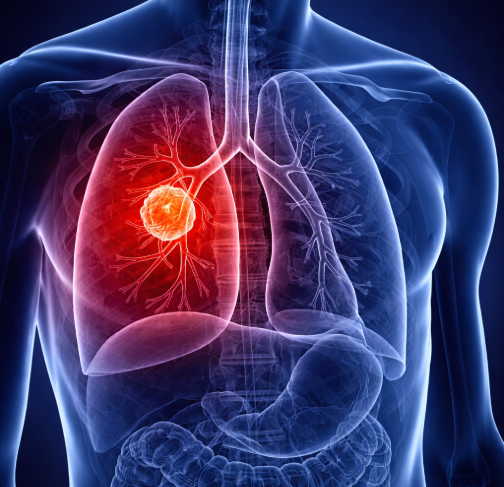
Lung cancer occurs when abnormal cells grow uncontrollably within lung tissue, forming tumors that impair normal lung function. It is one of the most frequently diagnosed cancers globally and a leading cause of cancer-related mortality.
The disease is broadly classified into:
The exact type helps guide treatment choices and planning. At OncoClinic, we combine advanced imaging, pathology, and personalized care planning to help you move forward with clarity and confidence.
In later stages, other symptoms can include chest pain, difficulty breathing, fluid build-up around the lungs, and shoulder pain.
Lung cancer screening can detect cancer early, before symptoms appear, when treatment is more likely to be effective, using a low-dose CT scan (LDCT) of the chest.
If you think you may be at high risk, talk to a healthcare provider to see if lung cancer screening is right for you.
Lung cancer screening is recommended only for individuals at high risk and is not advised for the general population. It is usually performed once a year and is typically recommended for people who:
Screening is not recommended for people who:
Lung cancer is often diagnosed after symptoms appear or when an abnormality is found on imaging tests such as a chest X-ray or CT scan. If lung cancer is suspected, further tests are done to confirm the diagnosis. These usually include a biopsy, where a small sample of tissue is taken from the lung or nearby lymph nodes and examined under a microscope.
The biopsy allows doctors to determine the histology, which means identifying the type of lung cancer (for example, non-small cell or small cell lung cancer). This step is essential because different types of lung cancer are treated differently.
In addition, molecular testing is performed on the tumor sample to look for specific genetic changes that can guide treatment. This may include next-generation sequencing (NGS), an advanced test that analyzes multiple genes simultaneously. Molecular testing helps doctors decide whether targeted therapies or immunotherapy may be effective and is a key step in choosing the best treatment plan.
Other tests, such as bronchoscopy, may also be used to help obtain tissue or better evaluate the disease.
Once lung cancer is confirmed, doctors determine the stage, which describes how far the cancer has spread.
Staging helps guide treatment decisions and usually involves several imaging and diagnostic tests, including:
Based on the results of these tests, lung cancer is staged from Stage I to Stage IV, ranging from cancer limited to the lung to cancer that has spread to distant organs. Staging, together with histology and molecular testing, is essential for planning the most appropriate treatment.
At OncoClinic, lung cancer care is delivered through an integrated, patient-focused approach. Treatment plans are tailored based on cancer type, stage, and overall health, and may include:
Lung cancer overview
American Cancer Society, 2026
Signs and symptoms of lung cancer
American Cancer Society, 2025
Lung cancer risk factors
American Cancer Society, 2026
Lung cancer screening guidelines
American Cancer Society, 2026
Lung cancer – patient version
National Cancer Institute (NCI), 2026
Non-small cell lung cancer treatment (PDQ®) – patient version
National Cancer Institute (NCI), 2026
Small cell lung cancer treatment (PDQ®) – patient version
National Cancer Institute (NCI), 2026
NCCN clinical practice guidelines in oncology: non-small cell lung cancer and small cell lung cancer
National Comprehensive Cancer Network (NCCN), 2026
The IASLC lung cancer staging project: TNM classification of lung cancer (8th edition)
Goldstraw P et al. – Journal of Thoracic Oncology, 2016
NCCN guidelines insights: non-small cell lung cancer
Ettinger DS et al. – Journal of the National Comprehensive Cancer Network, 2023
Updated molecular testing guideline for the selection of lung cancer patients for targeted therapies
Lindeman NI et al. – Journal of Thoracic Oncology, 2018
Therapy for stage IV non–small-cell lung cancer
Hanna NH et al. – Journal of Clinical Oncology, 2020
Reduced lung-cancer mortality with low-dose computed tomographic screening
Aberle DR et al. – New England Journal of Medicine, 2011
Lung and bronchus cancer statistics
Surveillance, Epidemiology, and End Results (SEER) Program, 2026