Popular Searches
- Cancer Types
- Treatment
Popular Searches
- Cancer Types
- Treatment

Popular Searches
Ovarian cancer develops when abnormal cells grow uncontrollably in the ovaries, which are part of the female reproductive system and are responsible for producing eggs and female hormones.
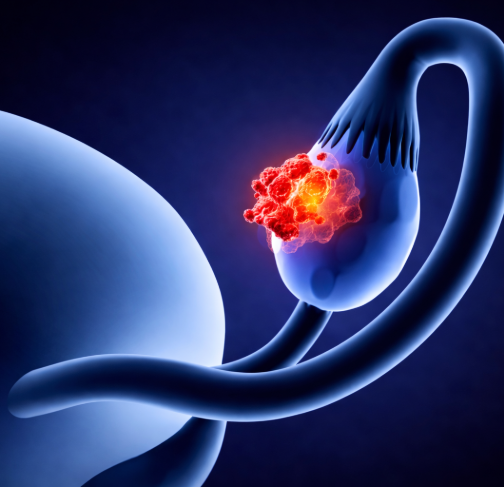
Ovarian cancer develops when abnormal cells grow uncontrollably in the ovaries, which are part of the female reproductive system and are responsible for producing eggs and female hormones. Ovarian cancer is often diagnosed at an advanced stage because early disease usually causes few or no symptoms.
The most common type is epithelial ovarian cancer, which arises from the surface cells of the ovary or nearby tissues. Less common types include germ cell tumors and sex cord–stromal tumors, which behave differently and may require different treatment approaches.
At OncoClinic, we coordinate appropriate diagnostics and specialist review, provide clear explanations, and guide a personalized care plan aligned to your diagnosis and goals.
Symptoms that are new, persistent, or occur frequently should be evaluated by a healthcare professional.
There is no effective routine screening test for ovarian cancer in the general population.
Tests such as CA-125 blood testing and transvaginal ultrasound have not been shown to reduce mortality when used for screening in women without symptoms. Therefore, routine screening is not recommended for women at average risk.
High-risk women, such as those with BRCA mutations or strong family history, may benefit from:
Women should discuss personal risk and preventive strategies with their healthcare provider.
Ovarian cancer is often diagnosed after symptoms prompt further evaluation.
Diagnostic evaluation may include:
A definitive diagnosis is usually made during surgery, when tissue samples are examined by a pathologist.
After diagnosis, staging determines how far the cancer has spread and guides treatment planning.
Staging evaluation may include:
Ovarian cancer is staged from Stage I to Stage IV:
At OncoClinic, ovarian cancer care is delivered through a multidisciplinary, patient-centered approach. Treatment is tailored according to cancer stage, tumor biology, and overall health.
Surgery: Surgery is a cornerstone of ovarian cancer treatment and aims to remove as much visible disease as possible. When surgery is indicated, procedures are performed at our accredited partner hospitals under the direct coordination and supervision of our medical team, ensuring continuity and quality of care.
Chemotherapy: Chemotherapy is commonly used after surgery and, in some cases, before surgery. It is usually administered intravenously or directly into the abdomen.
Targeted therapy: Treatments, such as PARP inhibitors, may be used in selected patients, particularly those with specific genetic mutations.
Immunotherapy: Immunotherapy is being used in selected cases and is an area of ongoing research.
Combined treatment strategies: Most patients receive a combination of surgery and systemic therapy to achieve the best outcomes.
Palliative and supportive care: Supportive care focuses on symptom management, nutritional support, pain control, emotional support, and quality of life at all stages of disease.
Ovarian cancer overview
American Cancer Society, 2026
Ovarian cancer – patient version
National Cancer Institute (NCI), 2026
NCCN clinical practice guidelines in oncology: ovarian cancer
National Comprehensive Cancer Network (NCCN), latest version
Epithelial ovarian cancer
Lheureux S et al. – The Lancet, 2019
Ovarian cancer, NCCN guidelines insights
Armstrong DK et al. – Journal of the National Comprehensive Cancer Network, 2019