Popular Searches
- Cancer Types
- Treatment
Popular Searches
- Cancer Types
- Treatment

Popular Searches
Uterine cancer is a condition in which abnormal cells grow uncontrollably in the uterus (womb)—the organ where a baby grows during pregnancy.
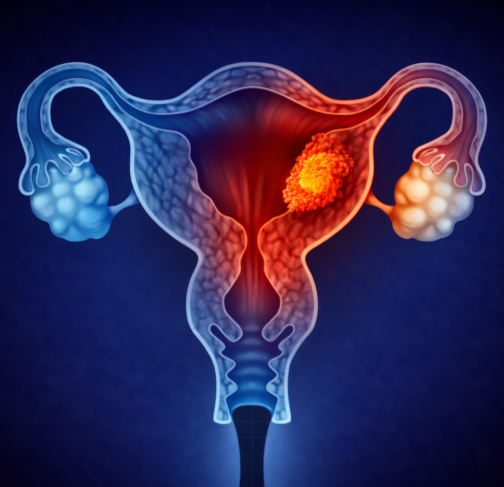
Uterine cancer is a condition in which abnormal cells grow uncontrollably in the uterus (womb)—the organ where a baby grows during pregnancy. In most cases, the cancer starts in the inner lining of the uterus, called the endometrium, which is why it is often referred to as endometrial cancer.
While uterine cancer can occur at any age, it is most commonly diagnosed after menopause. When detected early, it is often highly treatable. At OncoClinic, we support you with accurate diagnostics, clear explanations, and a personalized plan designed around your health needs and goals.
Any abnormal bleeding should be evaluated promptly by a healthcare professional.
The most important early warning sign is abnormal vaginal bleeding, especially any bleeding after menopause. Because symptoms often appear early, prompt medical evaluation is the best way to detect uterine cancer.
Anyone who experiences abnormal vaginal bleeding or unusual discharge should seek medical care, regardless of age.
There is no routine screening test for uterine cancer for people without symptoms. Screening is not recommended for the general population because most uterine cancers are found early due to noticeable symptoms.
Some people at higher risk, such as those with Lynch syndrome or a strong family history of uterine or colorectal cancer, may need closer monitoring and should discuss personalized follow-up with their healthcare provider.
Uterine cancer is usually diagnosed after a person reports symptoms, most often abnormal vaginal bleeding. To find the cause, a doctor may perform tests such as a pelvic exam and ultrasound, followed by an endometrial biopsy, in which a small sample of tissue is taken from the lining of the uterus and examined for cancer cells. A biopsy is the main test used to confirm the diagnosis.
In most cases, a hysteroscopy is performed as part of the diagnostic process. During this procedure, a thin camera is gently inserted into the uterus through the cervix, allowing the doctor to directly examine the uterine lining and accurately guide tissue sampling. Hysteroscopy improves diagnostic accuracy by identifying abnormal areas that may not be visible on imaging alone.
If cancer is found, additional tests such as imaging scans may be done to see how far the cancer has spread. This process is called staging. Uterine cancer is staged from Stage I to Stage IV, using information from imaging exams such as CT scans, MRI, and PET/CT.
In general, earlier stages indicate the cancer is confined to the uterus, while advanced stages indicate it has spread — a distinction that helps doctors choose the most appropriate treatment.
At OncoClinic, treatment is carefully tailored to each patient based on the stage of the cancer, tumor type, overall health, and personal circumstances. We provide comprehensive outpatient oncology care and work closely with trusted hospital partners for treatments that require hospitalization. Our treatment options may include:
Surgery: Surgery is the main treatment for most uterine cancers and is often the first step in care. When surgery is recommended, it is performed at one of our partner hospitals, with coordination and follow-up provided by the OncoClinic team.
Systemic therapies: Systemic treatments use medications that travel through the bloodstream to treat cancer throughout the body. These may include chemotherapy, hormone therapy, and other drug treatments, depending on the cancer type and stage. Systemic therapies are commonly used for advanced disease, higher-risk cancers, or when surgery is not an option, and are usually managed on an outpatient basis at OncoClinic or in coordination with partner hospitals when needed.
Radiation therapy: Radiation therapy uses high-energy radiation to destroy cancer cells and reduce the risk of recurrence. It may be given externally or internally and can be used after surgery or, in some cases, as the main treatment. Radiation treatments are delivered in specialized centers, with care coordinated by our clinic.
Supportive and follow-up care: Supportive care focuses on symptom control, recovery, and long-term monitoring to support quality of life during and after treatment. This care is provided at OncoClinic, with close coordination across all stages of the treatment journey.
Endometrial cancer overview
American Cancer Society, 2026
Endometrial cancer risk factors
American Cancer Society, 2026
Signs and symptoms of endometrial cancer
American Cancer Society, 2026
Endometrial cancer – patient version
National Cancer Institute (NCI), 2026
Endometrial cancer treatment (PDQ®) – patient version
National Cancer Institute (NCI), 2026
Endometrial cancer prevention (PDQ®)
National Cancer Institute (NCI), 2026
NCCN clinical practice guidelines in oncology: uterine neoplasms
National Comprehensive Cancer Network (NCCN), 2026
ESGO/ESTRO/ESP guidelines for the management of patients with endometrial carcinoma
Concin N et al. – International Journal of Gynecological Cancer, 2021
Endometrial cancer statistics
Surveillance, Epidemiology, and End Results (SEER) Program, 2026
Cancer progress and priorities: uterine cancer
Felix AS, Brinton LA – Cancer Epidemiology Biomarkers & Prevention, 2018
Endometrial cancer: ESMO clinical practice guidelines
Colombo N et al. – Annals of Oncology, 2016
Endometrial cancer
Lu KH, Broaddus RR – New England Journal of Medicine, 2020