Popular Searches
- Cancer Types
- Treatment
Popular Searches
- Cancer Types
- Treatment

Popular Searches
Direct visualization for early detection and precise diagnosis.
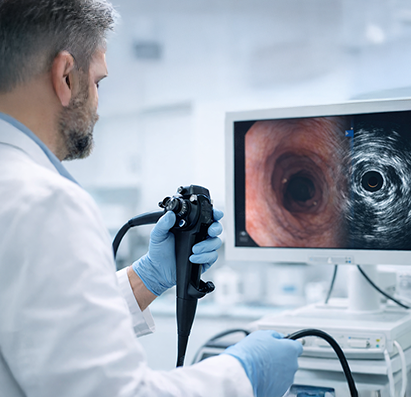
Endoscopy is a minimally invasive medical procedure that uses a thin, flexible tube with a camera to look directly inside organs and tissues—without the need for surgery. It allows doctors to examine internal structures in real time, providing highly detailed visual information that cannot be obtained with imaging tests alone. Endoscopy plays a vital role in modern medicine by enabling early detection of cancer and other conditions, precise diagnosis, and timely intervention with minimal disruption to patients’ daily lives.
At OncoClinic, endoscopic procedures are used in both oncological and non-oncological care to evaluate symptoms, detect disease early, confirm diagnoses through biopsy, and, in some cases, treat conditions during the same procedure. All endoscopies are performed using carefully maintained equipment, strict sterilization protocols, and clinical practices aligned with international standards, ensuring safety, accuracy, and patient comfort.
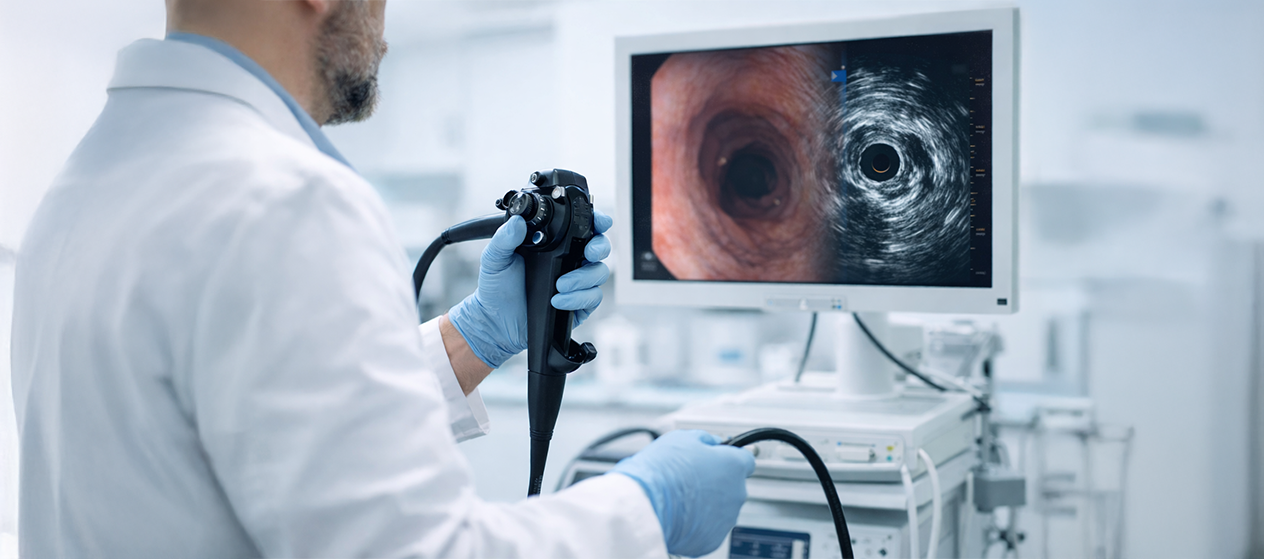
Gastroscopy (upper endoscopy): Examines the esophagus, stomach, and first part of the small intestine. Commonly used to investigate reflux, swallowing difficulties, bleeding, or to detect inflammation, ulcers, and cancers of the upper digestive tract.
Colonoscopy: Evaluates the entire colon and rectum. It is the gold standard for colorectal cancer screening, detection and removal of polyps, investigation of bowel symptoms, and biopsy of abnormal findings.
Bronchoscopy: Allows direct visualization of the airways and lungs. Used to investigate lung abnormalities, infections, bleeding, persistent cough, or reminding lung cancer, with the ability to collect tissue samples.
Laryngoscopy: Examines the larynx (voice box) and surrounding structures. Used to investigate hoarseness, difficulty swallowing, throat pain, persistent cough, or suspected cancers of the larynx and surrounding areas, with the ability to collect tissue samples.
Hysteroscopy: Examines the inside of the uterus. Used to evaluate abnormal uterine bleeding, infertility, polyps, fibroids, or suspected uterine cancer.
Cystoscopy: Provides direct visualization of the bladder and urethra. Commonly performed to investigate blood in the urine, recurrent infections, urinary symptoms, or suspected bladder cancer.
Endoscopic ultrasound (EUS): Combines endoscopy with ultrasound to obtain detailed images of digestive organs and surrounding structures, including the pancreas, bile ducts, lymph nodes, and layers of the gastrointestinal wall. EUS is especially valuable for cancer staging and guiding fine-needle biopsies.
Endobronchial ultrasound (EBUS): A specialized bronchoscopy technique that uses ultrasound to evaluate lymph nodes and tissues around the airways. It is widely used for lung cancer staging and lymph node sampling without the need for surgery.