Logo

Ultrasound

Real-time, radiation-free imaging for comprehensive patient care.
contact-img

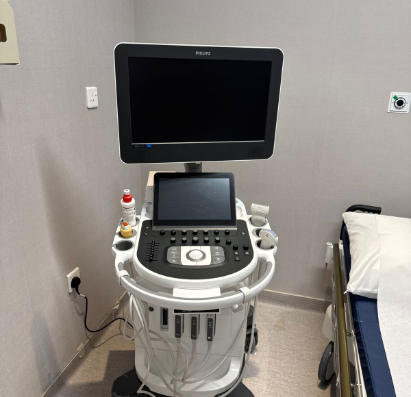
Ultrasound is a non-invasive imaging test that uses sound waves to create real-time images of the body’s soft tissues and organs—without using radiation. It is widely used in everyday medical care to evaluate organs, blood flow, and soft tissues across many clinical specialties, as well as in cancer diagnosis and follow-up. During the exam, a handheld device called a transducer is gently moved over the area being examined. The procedure typically takes 15–30 minutes, is painless, and requires no recovery time.

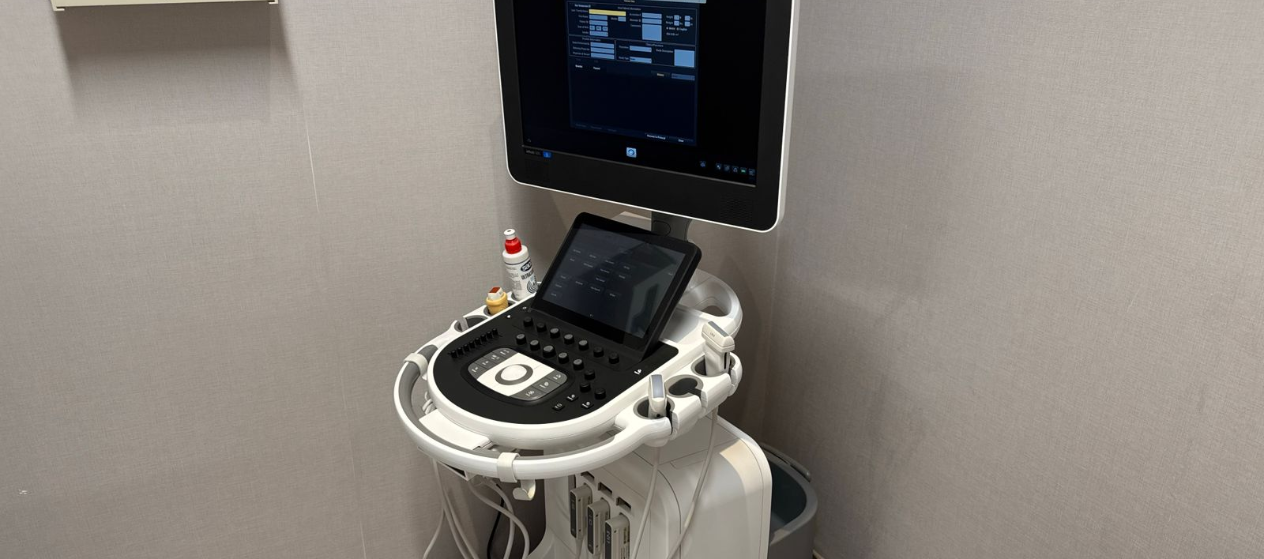
At OncoClinic, we use state-of-the-art ultrasound technology to provide safe, fast, and accurate diagnostic information for both non-oncological and oncological care. Ultrasound is commonly used to assess organs such as the liver, kidneys, thyroid, gallbladder, and blood vessels, and also plays an important role in detecting, monitoring, and guiding care for cancer when soft-tissue evaluation or real-time imaging is needed.
What it visualizes best


  • Evaluation of organs and soft tissues in non-oncological care, including liver, kidneys, gallbladder, thyroid, testes, and lymph nodes
  • Assessment of blood flow and vascular conditions using Doppler ultrasound
  • Distinguishing solid from fluid-filled structures, such as cysts or fluid collections
  • Real-time monitoring of organ movement
  • Guidance for procedures, including biopsies, fluid drainage, and needle placement
  • Follow-up imaging, especially when repeated examinations are required
shift-img

Benefits


  • Radiation-free imaging, safe for repeated use and routine monitoring
  • Real-time visualization, allowing immediate assessment during the exam
  • Supports accurate, targeted procedures, improving safety and precision
  • Comfortable, non-invasive exam with no recovery time required

Limitations


  • Image quality may be affected by body habitus and the presence of bowel gas or air
  • Limited evaluation of deep structures in some patients
  • Not suitable for lungs or bones, as sound waves do not travel well through air or dense bone
  • Operator-dependent, meaning image quality relies on technical expertise

Side effect profile


  • Ultrasound is safe, painless, and non-invasive
  • No radiation exposure
  • No recovery time is required—patients can return to normal activities immediately
